The Italian Boot and its Regions
The Ultimate Guide to the 20 Regions of Italy
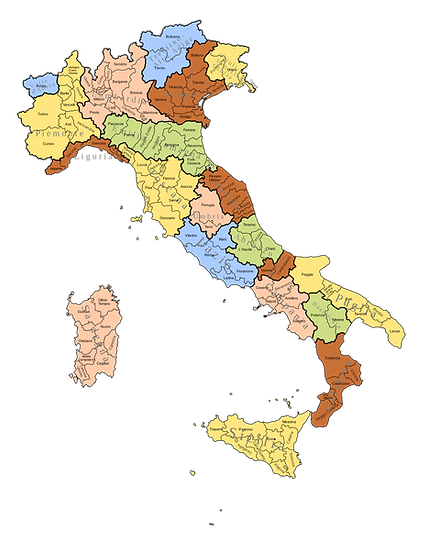
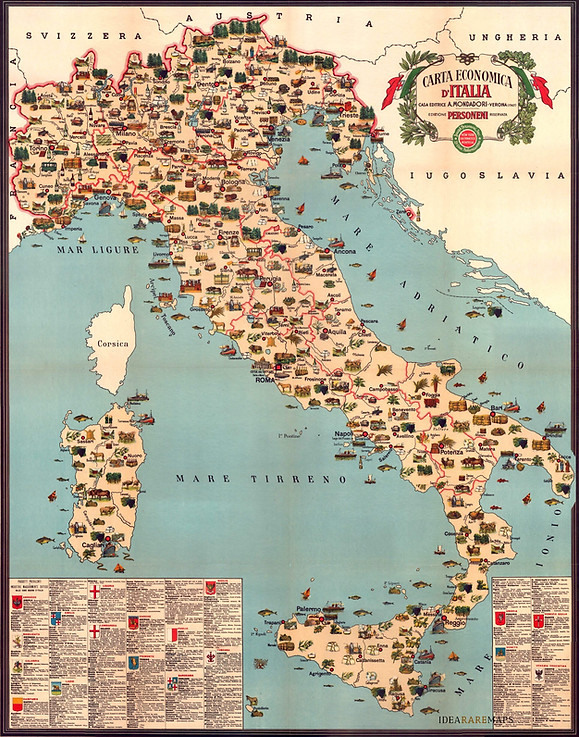
Italy is far more than a country—it is a breathtaking mosaic of cultures, local languages, culinary traditions, and rich history, all bound together under a single flag. The administrative division of Italy into 20 regions (Regioni) reflects the historical fact that until the 19th century, the Apennine Peninsula was fragmented into independent kingdoms, duchies, and city-states. Each region in Italy boasts a distinct character, dramatically varied landscapes—from the snow-capped Alpine peaks in the north to the sun-drenched coasts of the south—and fascinating local dialects. For students of the Italian language, getting to know these regions is the ultimate key to unlocking the culture, mentality, and very soul of Italy.
Northern Regions (Nord Italia)
1. Piemonte (Piedmont)
-
Geography: Located in northwestern Italy, bordering France and Switzerland. Its name perfectly reflects its topography: "at the foot of the mountains" (Ai piedi dei monti), as it is surrounded on three sides by the Alps.
-
History: The region was the heart of the movement for Italian unification (Risorgimento). The House of Savoy emerged from here, and the regional capital, Turin (Torino), served as the first capital of unified Italy in 1861.
-
Culture: A major European industrial, cultural, and culinary hub. Piedmont is the birthplace of world-renowned Barolo and Barbaresco wines, rare white truffles, Gianduja chocolate, and the global Slow Food movement.
2. Valle d'Aosta (Aosta Valley)
-
Geography: The smallest and most mountainous region in Italy, tucked into the extreme northwestern corner between France and Switzerland. It home to Europe’s highest peaks, including Mont Blanc (Monte Bianco).
-
History: Due to its strategic location among Alpine mountain passes, the area has been inhabited since Roman times; the capital, Aosta, is often called the "Rome of the Alps" due to its well-preserved ancient ruins. The region enjoys a special autonomous status.
-
Culture: An officially bilingual region where both Italian and French hold equal status. The culture is distinctly Alpine, characterized by traditional wood-and-stone architecture, dramatic castles, and a hearty cuisine rich in cheeses (like Fontina) and warm stews.
3. Lombardia (Lombardy)
-
Geography: A vast and powerful region in north-central Italy, stretching from the Alps down to the fertile Po River Valley. It is famous for its iconic lakes, including Lake Como and Lake Maggiore.
-
History: Named after the Lombards, a Germanic tribe that conquered the region in the 6th century. Lombardy was a powerhouse during the Middle Ages and the Renaissance under the fierce rule of the Visconti and Sforza duchesses.
-
Culture: Its capital, Milan (Milano), is the beating heart of Italy's economy, fashion, and design. The region seamlessly blends a fast-paced, modern lifestyle with architectural wonders like the Duomo of Milan, complemented by rich culinary staples like Risotto alla Milanese and Cotoletta.
4. Trentino-Alto Adige
-
Geography: An autonomous region in northeastern Italy, nestled entirely within the breathtaking Alps and the Dolomites, bordering Austria and Switzerland.
-
History: The region was part of the Austro-Hungarian Empire for centuries and was annexed to Italy only after World War I.
-
Culture: The region is culturally split in two: the southern part (Trentino) is predominantly Italian, while the northern part (Alto Adige, or South Tyrol) is deeply Germanic, where the majority of the population speaks German as their native tongue. The architecture, bilingual signs, and alpine cuisine (such as Strudel and Spaetzle) are heavily influenced by Austrian culture.


5. Veneto
-
Geography: Located in northeastern Italy, it spans from the peaks of the Dolomites in the north down to the shores of the Adriatic Sea in the east.
-
History: The crown jewel of the region is Venice (Venezia), which for over a millennium operated as an independent, ultra-wealthy maritime republic (La Serenissima) dominating Mediterranean trade routes.
-
Culture: A magnificent cradle of Renaissance and Gothic culture. The region is famous for its fine art, Palladian architecture, the mysterious Venice Mask Carnival, and iconic literature (Verona serving as the backdrop for Romeo and Juliet). The cuisine centers on rice, fresh seafood, and world-famous Prosecco wine.
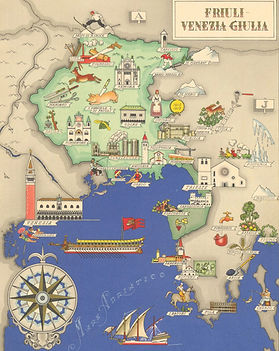
6. Friuli-Venezia Giulia
-
Geography: The easternmost region of Northern Italy, bordering Austria to the north, Slovenia to the east, and kissing the Adriatic Sea to the south.
-
History: A historic crossroads where Latin, Germanic, and Slavic cultures collide. The capital city, Trieste, served as the primary seaport for the Austro-Hungarian Empire, becoming a highly cosmopolitan, intellectual hub.
-
Culture: Due to its complex border history, the region enjoys autonomous status and incredible linguistic diversity, including Italian, Friulian, Slovenian, and German. Trieste's famous historic café culture is deeply tied to European literary history, and the region is celebrated for producing the premium Prosciutto di San Daniele.
7. Liguria
-
Geography: A narrow, crescent-shaped strip of coastline in northwestern Italy, squeezed tightly between the Ligurian Sea and the sweeping Alpine and Apennine mountain ranges. It is widely known as the "Italian Riviera."
-
History: The capital, Genoa (Genova), was a fierce, wealthy maritime republic and the historic archenemy of Venice. It is the birthplace of the legendary explorer Christopher Columbus.
-
Culture: A culture forged by sailors, fishermen, and colorful villages clinging to steep cliffs (most famously the Cinque Terre). The local cuisine celebrates authentic Pesto Genovese, crispy Focaccia, and exceptionally delicate olive oils.


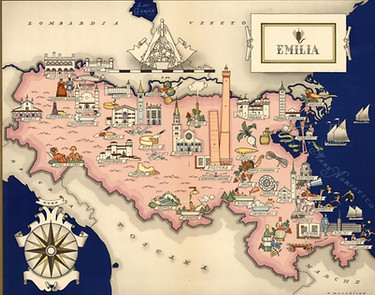
8. Emilia-Romagna
-
Geography: A large, prosperous region in north-central Italy, composed of two historic areas, stretching across the fertile Po Valley all the way to the Adriatic coast.
-
History: The region was historically forged along the ancient Roman road, the Via Emilia. Its capital, Bologna, is home to the oldest university in the Western world (founded in 1088), while the city of Ravenna served as the final capital of the Western Roman Empire.
-
Culture: Widely considered the "Culinary Heart" of Italy, it is the birthplace of Parmigiano Reggiano, traditional balsamic vinegar from Modena, Prosciutto di Parma, and handmade tortellini. It is also the iconic "Motor Valley"—home to supercar legends Ferrari, Lamborghini, and Maserati—and boasts a vibrant, cooperative social culture.
Central Regions (Centro Italia)

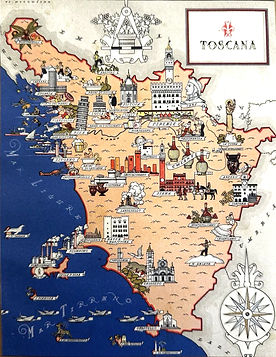
9. Toscana (Tuscany)
-
Geography: Situated in west-central Italy, Tuscany is defined by its quintessential postcard landscapes of rolling green hills, vineyards, cypress trees, and the Tyrrhenian coastline.
-
History: Once the heartland of the enigmatic Etruscan civilization, it evolved during the Renaissance into the cradle of modern Western culture under the wealthy patronage of the Medici family in Florence (Firenze).
-
Culture: Tuscany is the linguistic birthplace of the modern Italian language; the Tuscan dialect used by Dante, Petrarch, and Boccaccio became the blueprint for the standard Italian we study today. The region is dense with Renaissance masterpieces, world-class Chianti wines, and a human history that reshaped the world.
10. Umbria
-
Geography: Located right in the middle of the peninsula, Umbria is affectionately called "The Green Heart of Italy" (Il cuore verde d'Italia) because it is the only region in the peninsula that shares no borders with the sea or other countries. Its landscape is rich with dense forests, lakes, and ancient hilltop towns.
-
History: Ancient home to the Umbri tribes, the region transformed during the Middle Ages into a massive center of Christian mysticism and spirituality, primarily due to the life and legacy of Saint Francis of Assisi.
-
Culture: A region with a serene, mystical, and deeply historical atmosphere. Towns like Assisi, Perugia, and Orvieto preserve a flawless medieval appearance. Umbria is also world-renowned for its jazz music (the Umbria Jazz Festival), artisan chocolates (Baci Perugina), and highly prized black truffles.
11. Marche
-
Geography: Located in east-central Italy, sandwiched between the rugged Apennine Mountains to the west and the blue Adriatic Sea to the east, featuring a beautiful rhythm of hills rolling down to the coast.
-
History: The name comes from the Germanic word "Mark" (march or borderland), as it was divided into border territories under the Holy Roman Empire and the Papal States during the Middle Ages. The Renaissance town of Urbino was a dazzling intellectual and artistic center.
-
Culture: A region that masterfully preserves a rustic, pastoral authenticity far away from mass tourism. It is the birthplace of the Renaissance painter Raphael and the opera composer Gioachino Rossini. Local culture beautifully blends maritime fishing traditions with inland mountain farming.
12. Lazio
-
Geography: Situated in west-central Italy along the Tyrrhenian Sea, featuring fertile volcanic plains, crater lakes, and rolling hills.
-
History: The absolute historical engine of Italy and the entire Roman Empire. Here lies the regional and national capital—Rome (Roma), the "Eternal City"—as well as the independent Vatican City State, the spiritual heart of the Roman Catholic Church.
-
Culture: Lazio offers endless layers of history—from antiquity and the Middle Ages to the grand Baroque era and modern times. The local culture is famously warm, expressive, and loud, and its cuisine is celebrated worldwide for legendary pasta dishes like Carbonara, Amatriciana, and Cacio e Pepe.


Southern Regions (Sud Italia) & Islands

13. Abruzzo
-
Geography: Located in east-central/southern Italy, directly east of Rome. A wild, rugged, and mountainous region that features the highest peaks of the Apennines (such as the Gran Sasso) before sloping down into the sandy beaches of the Adriatic Sea.
-
History: Due to its fierce terrain, Abruzzo remained relatively isolated for centuries, which beautifully allowed it to preserve ancient traditions and an untouched natural environment.
-
Culture: Often called "the wildest region" or the "park region," over a third of its territory is protected nature reserves, home to Apennine wolves and brown bears. The culture is deeply tied to pastoral life and ancient seasonal shepherd migrations (Transumanza). Its signature dish is Arrosticini—delicate, grilled skewers of mutton.
14. Molise
-
Geography: A tiny south-central region bordering Abruzzo, Puglia, Campania, and the Adriatic Sea. It is Italy's youngest region, having been politically separated from Abruzzo only in 1963.
-
History: The area was the historic home of the Samnites, a fierce ancient warrior tribe that waged legendary wars against the rising Roman Republic.
-
Culture: There is a running joke inside Italy that "Molise doesn't exist" (Il Molise non existe) due to its small size and quiet nature. However, it offers completely untouched rural culture, ancient crafts (such as traditional bell-founding in Agnone), and pristine, crowd-free landscapes.
15. Campania
-
Geography: Located in southwestern Italy along the Tyrrhenian Sea, it encompasses the famous Gulf of Naples, the dramatic Mount Vesuvius, and the breathtaking Amalfi Coast.
-
History: The ancient Romans dubbed this blessed region "Campania Felix" (Happy/Fortunate Campania) due to its incredibly fertile volcanic soil. It is exceptionally rich in Greek and Roman history, anchored by the frozen-in-time ruins of Pompeii and Herculaneum.
-
Culture: A fiercely energetic, musical, and colorful southern culture. Its capital, Naples (Napoli), is the cradle of authentic Neapolitan pizza, passionate street life, and iconic Italian iconography. It is also the exclusive home of premium Mozzarella di Bufala.
16. Puglia (Apulia)
-
Geography: Located in the "heel" of the Italian boot in the far southeast. It is a mostly flat, sun-baked region featuring the longest coastline of any mainland region, touching both the Adriatic and Ionian seas.
-
History: As Italy's gateway to the East, Puglia was a strategic maritime crossroads conquered by Greeks, Romans, Byzantines, Normans, and Spaniards, all leaving behind a profound architectural legacy.
-
Culture: A land characterized by ancient, twisted olive trees (Puglia produces the lion's share of Italy's olive oil), unique cone-roofed stone houses in Alberobello known as Trulli, and a hypnotic, energetic traditional folk dance called the Tarantella.
17. Basilicata
-
Geography: A mountainous, relatively isolated region nestled in the "instep" of the Italian boot in the south, sandwiched between Puglia and Calabria, with two small, beautiful coastlines.
-
History: Historically known as "Lucania," the region endured severe poverty and isolation for much of the 19th and 20th centuries, but has undergone an astonishing cultural renaissance in recent decades.
-
Culture: The undisputed crown jewel of the region is the city of Matera, famous for the Sassi—ancient cave dwellings carved directly into the limestone cliffs. Designated a UNESCO World Heritage site, it has served as the cinematic backdrop for numerous Hollywood biblical epics. The cuisine is pleasantly simple, rustic, and spiced with local chili peppers.
18. Calabria
-
Geography: Located at the absolute southern tip of the peninsula—the "toe" of the boot. It is surrounded by the Ionian and Tyrrhenian seas and is separated from the island of Sicily by the narrow Strait of Messina.
-
History: In antiquity, it was the beating heart of Magna Graecia (Greater Greece), serving as a wealthy center of Greek culture, philosophy, and art (most famously celebrated by the discovery of the ancient Riace Bronze statues).
-
Culture: A dramatic blend of rugged, wild mountain ranges (like the Sila) and Caribbean-like beaches. The local culture is deeply bound to the sea and the soil, and the cuisine is famous for its love of fire, featuring the local spicy Peperoncino and the spreadable, fiery pork sausage known as 'Nduja.
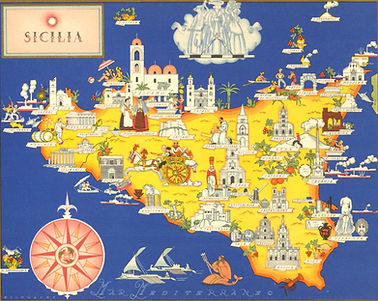
19. Sicilia (Sicily)
-
Geography: The largest island in the Mediterranean Sea, located just across the toe of the boot. Its geography is dominated by the towering, active volcano of Mount Etna.
-
History: A supreme strategic crossroads of the Mediterranean, invaded and settled by Phoenicians, Greeks, Romans, Arabs, Normans, and Spaniards. Each civilization left an indelible layer of art, language, and architecture.
-
Culture: A completely unique Sicilian identity that sits halfway between Europe and North Africa. The architecture ranges from flawlessly preserved ancient Greek temples (like the Valley of the Temples in Agrigento) to explosive Sicilian Baroque. The cuisine famously fuses Arabic influences (like couscous, citrus, and saffron) with Italian staples, producing iconic desserts like Cannoli and Cassata.
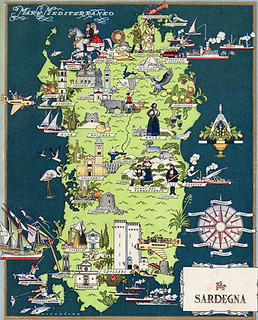
20. Sardegna (Sardinia)
-
Geography: The second-largest island in the Mediterranean, located far out to the west of the Italian mainland. It is defined by a rugged, mountainous interior and a coastline of world-famous, crystal-clear turquoise waters.
-
History: An isolated island that developed an enigmatic, advanced civilization during the Bronze Age—the Nuragic culture—which left behind thousands of mysterious stone megalithic fortresses (Nuraghe) peppered across the island. It enjoys a special autonomous status.
-
Culture: Sardinians hold a fiercely independent identity and speak their own distinct tongue (Sardinian), which linguists consider the closest living relative to classical Latin. The island's deep culture is historically oriented toward the rugged interior—a world of shepherds, ancient polyphonic singing, crisp Pane Carasau (flatbread), and sharp Pecorino Sardo cheese.